
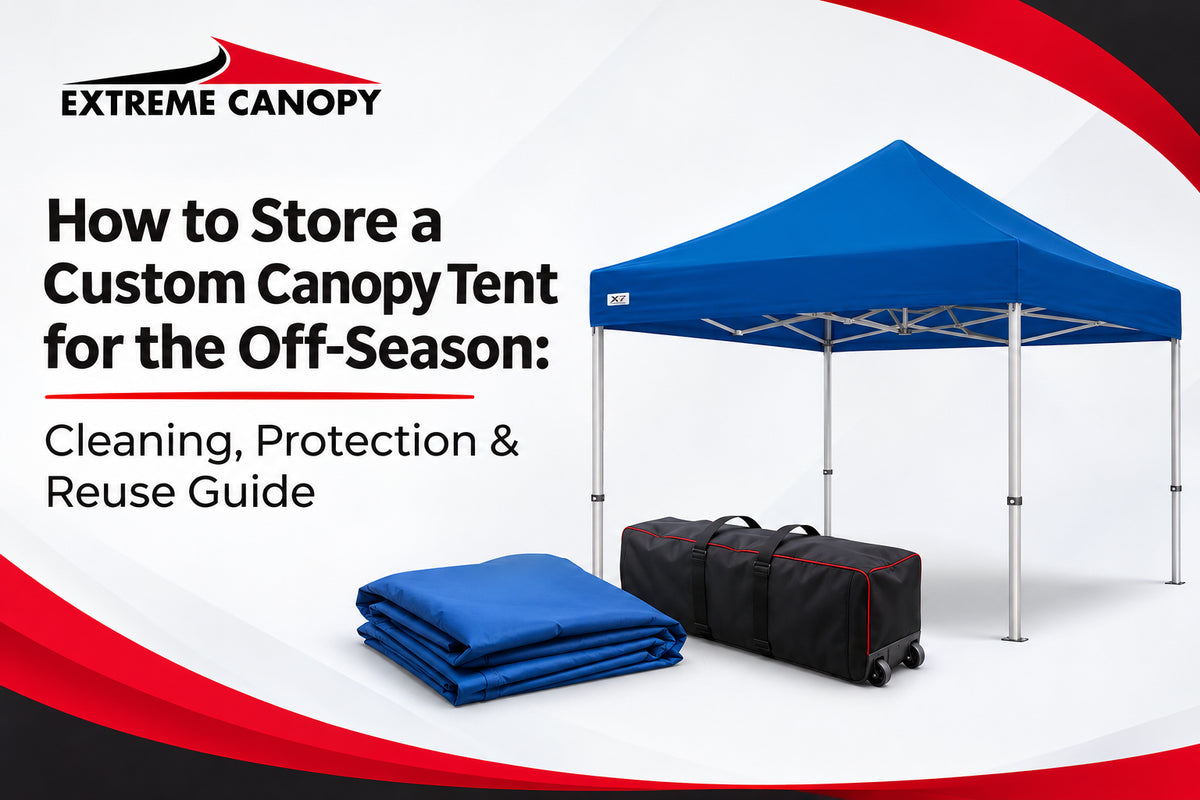
A busy event season can leave a canopy looking like it has personally attended every festival, trade show, farmers market, and parking-lot promotion in town. Dust settles into the fabric, grass clings to the feet, sidewalls pick up fingerprints, and the frame shows the signs of repeated setup and breakdown. Then the season ends, and the temptation is obvious: fold everything up, push it into storage, and promise yourself you will deal with it later.
That “later” usually arrives the night before the next event.
Knowing how to store a custom canopy tent properly helps protect the fabric, frame, printed graphics, and accessories during months of downtime. Good off-season storage also makes the next setup easier because you are not starting the season by discovering mildew, bent hardware, or a missing sidewall.
For businesses that rely on custom canopy tents as branded event equipment, storage is not housekeeping. It is part of protecting an investment.
The Last Event Is Really the First Step of Storage
The best time to prepare a canopy for the off-season is immediately after its final event.
That does not mean everything has to be deep-cleaned in the parking lot while the rest of the team is trying to go home. It does mean the canopy should not disappear into long-term storage while still carrying wet grass, mud, food residue, pollen, or moisture.
Open the canopy in a clean, dry area where you can inspect it properly. Look over the roof fabric, sidewalls, frame, connectors, feet, fasteners, and printed panels. If your setup includes banners, awnings, half walls, or other accessories, inspect those too.
The goal is simple: find problems while they are visible. A stain, loose fastener, or damp sidewall is easier to handle now than months later.
Clean First, Pack Second
If you remember only one storage rule, make it this one: do not pack a dirty canopy and expect storage to improve it.
Before the roof goes into a bag or cover, remove loose dirt with a soft brush or cloth. For more noticeable grime, follow the manufacturer’s cleaning recommendations for the specific fabric and printing method. Avoid aggressive scrubbing or harsh chemicals unless you know they are safe for the material.
Printed graphics deserve gentle treatment. Sidewalls deserve the same attention: remove debris, check attachment points, and inspect areas that regularly touch the ground.
The frame also needs a quick cleanup. Wipe away dirt and moisture, especially around joints, feet, and moving sections. If the canopy has been used near beaches, dusty lots, or muddy event grounds, pay extra attention to areas where debris can interfere with smooth operation.
Dry Means Dry, Not “Probably Dry Enough”
Moisture is one of the biggest enemies of long-term canopy storage.
A roof that feels mostly dry on the outside can still hold moisture in folds, seams, corners, or overlapping fabric. The same applies to sidewalls and protective covers. Once tightly folded and packed, trapped moisture has nowhere useful to go.
That can lead to odors, staining, mildew, and deterioration.
After cleaning, allow all fabric components to dry completely before folding them. If possible, spread roof and wall sections in a ventilated area rather than stacking them immediately. Check seams and corners by touch before packing.
Inspect the storage bag as well. A damp bag can undo all the work you just did. Make sure it is clean and dry before the canopy goes inside.
When people ask how to store a custom canopy tent, drying may be the least glamorous answer, but it is one of the most important.
Your Before-Storage and Before-Reuse Checklist
A simple two-stage inspection can save a lot of frustration. The first check happens before long-term storage. The second happens before the canopy returns to service.
|
Component |
Before Storage |
Before Reuse |
|
Roof Fabric |
Clean, fully dry, inspect seams and graphics |
Check for stains, damage, odor, or moisture |
|
Sidewalls |
Clean both sides, dry, inspect fasteners |
Confirm attachment points and graphics are intact |
|
Frame |
Wipe clean; inspect joints, feet, and moving parts |
Open fully and check smooth operation |
|
Fasteners & Connectors |
Check for looseness, wear, or missing pieces |
Confirm all attachment points function correctly |
|
Storage Bag/Cover |
Clean, dry, inspect zippers and handles |
Check for damage before transport |
|
Stakes, Ropes & Accessories |
Clean, count, and organize together |
Confirm the complete set is ready |
The table simply creates a repeatable routine, especially when several employees share responsibility for event equipment.
Give the Canopy a Better Home Than a Damp Corner
Once everything is clean and dry, think carefully about where it will spend the off-season.
A cool, dry, protected indoor location is generally the best choice. Avoid areas with standing water, excessive humidity, large temperature swings, pests, chemicals, or repeated impacts from other stored equipment.
A warehouse shelf or clean equipment room is usually preferable to a damp garage corner. Keep the canopy off wet floors whenever possible; shelving, pallets, or another raised surface can help.
Also think about what will be stored on top of the canopy. Heavy boxes, stacked furniture, or event equipment can put unnecessary pressure on frames and soft goods.
Wheeled Storage Bags Make Moving Day Less Dramatic
Larger commercial frames can be awkward to move, especially through warehouses, loading areas, convention centers, or long event corridors.
That is where wheeled storage bags become useful. A well-fitted bag keeps the folded frame contained, makes movement easier, and reduces the temptation to drag the frame across floors or parking lots.
Before storage, inspect the wheels, handles, zipper, and fabric of the bag. Remove dirt and make sure the inside is dry. If the bag includes pockets for ropes, stakes, or accessories, use them consistently so the team knows where smaller components belong.
For companies managing several custom canopy tents, clearly labeling each bag can also prevent mixed components, especially when different frame sizes or branded kits are stored together.
Avoid Heavy Stacking and Protect the Fabric During Transport
Warehouse space is valuable, so stacking equipment is understandable. Problems begin when convenience turns into excessive weight.
Avoid piling heavy objects directly on stored canopy frames, roofs, or walls. Pressure over time can damage fabric, deform components, or stress parts of the frame that were never intended to support a pile of inventory.
If canopy bags are stored horizontally, keep the weight reasonable and evenly distributed. Printed sidewalls should not be wedged beneath heavy equipment where pressure can damage the material or graphics.
Transport deserves similar care.
When a canopy frame is laid horizontally in a vehicle, remove the roof fabric rather than leaving it attached. A roof left on the frame can be pinched, rubbed, or stressed during loading and unloading. Separating the fabric also allows you to fold and protect it properly, which is especially useful for printed roofs.
That small step can help preserve both appearance and function.
Before Next Season, Do a Practice Setup
Do not make the first event of the year the first time the canopy comes out of storage.
A week or two before the season begins, schedule a test setup. Open the frame fully, attach the roof, install the walls, and check all accessories.
This gives you time to identify missing stakes, worn ropes, damaged connectors, or graphics that need attention before event day.
For businesses using multiple custom canopy tents, a preseason setup can confirm that each roof, wall, frame, and accessory set stayed with the correct kit.
If something needs replacement, discovering it early gives you time to order the correct part instead of improvising on event morning.
Storage Is Part of Long-Term Value
Quality canopy equipment is an investment, and maintenance habits influence how much value you get from it.
A strong commercial frame, durable printed roof, and professionally produced sidewalls can still suffer if they are repeatedly stored wet, crushed under heavy equipment, or transported carelessly.
Good storage practices require consistency: clean, dry, inspect, organize, protect, and then check everything again before the new season. That routine protects both function and appearance.

Frequently Asked Questions About Off-Season Canopy Storage
Can I store my canopy in a garage?
A garage can work if it stays reasonably dry, clean, and protected from standing water, excessive moisture, pests, and damaging temperature conditions. Keep the canopy off damp flooring and avoid stacking heavy equipment on top of it.
What should I check before next season?
Inspect the roof, sidewalls, frame, connectors, fasteners, storage bag, stakes, ropes, and accessories. Perform a complete practice setup before your first event so you have time to replace anything missing or damaged.
Should I wash my canopy before storage?
You should remove dirt and stains using cleaning methods suitable for the specific fabric and printed graphics. The most important follow-up step is ensuring every fabric component is completely dry before packing.
Should the canopy roof stay on the frame during storage?
That depends on the specific storage method and manufacturer recommendations. However, when transporting the frame horizontally, removing the roof helps reduce the risk of pinching, rubbing, or stressing the fabric.
Are wheeled storage bags worth using?
For commercial users who move canopy frames regularly, wheeled storage bags can make transport and organization considerably easier. They can also help protect the folded frame and provide a consistent place for storing the kit between events.
Put the Canopy Away Like You Plan to Use It Again
Learning how to store a custom canopy tent is really about making next season easier.
A few extra steps after the final event can prevent a long list of unpleasant surprises later. Clean the canopy before packing it. Make sure every fabric component is dry. Inspect the frame and accessories. Use protective storage equipment, avoid unnecessary stacking pressure, and choose a cool, dry location.
Then, before the next event season begins, open everything early and perform a complete test setup.
Your canopy has already done the hard work of travelling to events, sheltering staff, displaying your branding, and surviving countless setup crews asking, “Which corner goes where?” Giving it proper off-season care is a relatively small job that can help preserve its performance and professional appearance.
Explore Extreme Canopy’s range of custom canopy tents, accessories, storage solutions, replacement components, and wheeled storage bags to build a setup that is easier to protect, transport, and reuse season after season. A well-maintained canopy is not just ready for storage. It is ready for the next opportunity your business puts under it.