
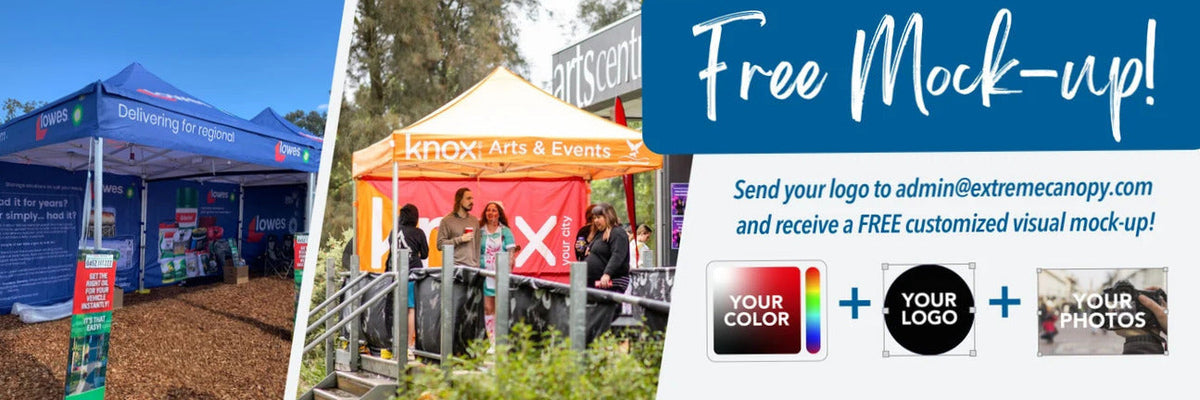
You've invested in a beautiful custom printed canopy tent. The colors are vibrant, your logo pops from across the event grounds, and customers can spot your booth before they can even smell the coffee or barbecue. It's a fantastic feeling—until someone spills sauce on the roof, a surprise rainstorm rolls through, or you realize the canopy has been stuffed into the back of your truck while still damp.
Sound familiar?
The good news is that keeping your canopy looking brand new isn't difficult. Like any professional equipment, it simply needs a little routine care. Whether you're attending trade shows every weekend, setting up at farmers markets, sponsoring sporting events, or hosting corporate promotions, proper maintenance can add years to the life of your investment.
Knowing how to clean a canopy tent, maintain its frame, and store it correctly protects not only the fabric but also your branding. A faded, dirty, or damaged canopy sends the wrong message to potential customers, while a clean, well-maintained one reflects professionalism and attention to detail.
In this guide, we'll cover everything from washing your canopy roof to inspecting the frame, storing it safely between events, and deciding when it's time for repairs instead of replacement.
Key Takeaways: Small Habits That Make a Big Difference
If you only remember a handful of things from this guide, make them these.
Never fold your canopy away while it's wet, as trapped moisture can lead to mildew and unpleasant odors. Clean the fabric using only mild soap and warm water, avoiding harsh chemicals that can damage the protective coating and printed graphics. Always transport your canopy in its wheeled storage case whenever possible, and inspect the frame before and after every event to catch loose bolts or worn connectors before they become bigger problems.
Following these simple habits can significantly extend the life of your custom canopy tent while keeping it looking professional event after event.
First Things First: Why Regular Maintenance Matters
Many people think canopy maintenance is only necessary after something goes wrong.
In reality, preventative care is much easier—and much less expensive—than repairing avoidable damage.
Your canopy faces constant exposure to sunlight, wind, rain, dirt, pollen, dust, food spills, bird droppings, and the occasional overenthusiastic customer who leans against a leg while chatting.
Each event adds a little wear.
Without routine cleaning and inspection, that wear slowly accumulates until small issues become expensive repairs.
Fortunately, a few minutes of maintenance after each event can prevent most common problems before they start.
How to Clean Your Canopy Without Damaging the Graphics
One of the most common questions owners ask is how to clean a canopy tent without ruining the printed artwork.
Fortunately, the answer is surprisingly simple.
Start by fully setting up the canopy so every surface is easily accessible. Remove loose dirt, leaves, dust, and debris using a soft brush or microfiber cloth. This prevents abrasive particles from scratching the fabric while cleaning.
Next, prepare a bucket of warm water mixed with a small amount of mild soap. A gentle dishwashing liquid works well, provided it doesn't contain bleach or harsh degreasers.
Using a soft sponge or microfiber cloth, gently wipe the canopy fabric in small sections. Focus on areas with visible dirt or stains, but avoid aggressive scrubbing that could wear down the protective coating over time.
Once cleaned, rinse the fabric thoroughly with clean water to remove any soap residue.
The final step is perhaps the most important.
Allow the canopy to air dry completely before folding or storing it.
Even a slightly damp canopy can develop mold, mildew, or unpleasant odors if packed away too soon.
Special Care for Dye-Sublimated Printing
Most premium custom printed canopy tent systems use dye-sublimation printing.
Unlike surface printing, dye sublimation permanently infuses ink into the fabric fibers, creating vibrant colors that resist cracking and peeling.
Even though this printing method is extremely durable, proper care still matters.
Avoid pressure washers, abrasive brushes, industrial cleaners, or solvent-based chemicals.
These products can gradually reduce water resistance and damage the protective coatings applied to commercial canopy fabrics.
Gentle cleaning preserves both the appearance and performance of your canopy for years.
Cleaning Common Event Stains
Outdoor events have an amazing ability to create unique cleaning challenges.
Coffee splashes from busy mornings, barbecue sauce at food festivals, mud from unexpected rain, sunscreen marks during summer events, and sticky beverage spills all have one thing in common—they're much easier to remove when cleaned promptly.
Instead of allowing stains to dry for several days, wipe them away as soon as possible using warm water and mild soap.
Quick action usually prevents permanent discoloration.
Remember, your branded canopy tent is often the first thing customers notice about your business.
Keeping it clean reinforces a professional image before visitors even step inside your booth.
Don't Forget the Frame
While most owners focus on the canopy fabric, the frame deserves just as much attention.
Commercial frames experience constant movement every time they're opened, folded, transported, and loaded into vehicles.
Dust, moisture, and road grime can gradually affect moving parts if ignored.
After each event, wipe down the frame using a damp cloth before allowing it to dry completely.
If dirt has accumulated around hinges or sliding components, remove it gently before storage.
Never force a frame that feels difficult to open or close.
Instead, inspect the affected area for debris or minor damage before attempting another setup.
Frame Maintenance Checklist
|
Component |
What to Check |
How Often |
Action if Damaged |
|
Legs |
Dents, bends, locking pins |
Before and after every event |
Replace damaged leg section before further use |
|
Trusses |
Straight alignment and rivets |
Every setup |
Replace bent trusses promptly |
|
Connectors (X5 Explorer) |
Nylon connectors for cracks or wear |
Monthly during frequent use |
Replace worn connector assemblies |
|
Connectors (X6 Velocity, Q8 Quasar & X7 Tectonic) |
Aluminum connectors for cracks or loose fasteners |
Before major events |
Tighten hardware or replace damaged components |
|
Roof Attachment Points |
Velcro, straps, stitching |
Every cleaning |
Repair loose stitching before it worsens |
|
Hardware |
Nuts, bolts, screws |
Monthly |
Tighten or replace missing hardware |
A quick inspection takes only a few minutes but can prevent much larger issues during your next event.
Protecting Your Investment Between Events
Cleaning is only half the equation.
Knowing how to store a custom canopy tent properly is equally important.
Many canopies spend far more time in storage than they do at events, meaning storage conditions play a major role in determining their lifespan.
Rather than folding your canopy into the corner of a damp garage or tossing it loosely into a trailer, treat it like the valuable business asset it is.
Storage Best Practices: Keep Your Canopy Event-Ready
Learning how to store a custom canopy tent correctly is one of the easiest ways to extend its lifespan. Surprisingly, many canopies don't fail because of rough weather—they fail because they're stored improperly after the event is over.
The golden rule is simple: never pack your canopy away while it's wet.
It might be tempting after a long day at a trade show or festival to collapse the frame, zip everything into the storage bag, and promise yourself you'll deal with it later. Unfortunately, moisture trapped inside the folded fabric creates the perfect environment for mold, mildew, and unpleasant odors. Even worse, prolonged dampness can weaken the waterproof coating and leave permanent stains on your canopy.
If the canopy gets caught in the rain, open it again as soon as you return home or to your warehouse. Allow the roof and sidewalls to air dry completely before packing everything away.
Temperature also matters. Store your canopy in a cool, dry location away from direct sunlight. Constant exposure to heat can gradually degrade fabrics, while excessive humidity encourages mold growth.
Whenever possible, keep the canopy inside its wheeled storage case or protective carry bag. Extreme Canopy's wheeled storage bags are designed to protect both the frame and printed fabric during transportation while making it much easier to move heavier commercial frames from your vehicle to the event site. Instead of dragging the frame across pavement or lifting unnecessary weight, the wheeled bag helps reduce wear on both the canopy and your back.
Avoid stacking heavy equipment on top of the stored canopy. While commercial frames such as the X6 Velocity, Q8 Quasar, and X7 Tectonic are engineered for outstanding strength during use, unnecessary pressure during storage can still place stress on the fabric and frame components over time.
Good storage habits ensure that your custom printed canopy tent is ready to impress customers at the next event rather than requiring unexpected cleaning or repairs.
Repair or Replace? Knowing When to Make the Right Call
Every canopy experiences wear eventually. The key is recognizing when a simple repair is enough and when replacing a component—or the entire canopy—makes better financial sense.
Small tears in the fabric, loose hook-and-loop straps, worn roof attachment points, or missing bolts can often be repaired quickly without replacing the entire system. Likewise, individual frame legs, trusses, and connectors are often available as replacement parts for commercial canopies.
If only one section of your frame has been damaged after an accidental impact, replacing that component is typically far more economical than purchasing a brand-new canopy.
For example, owners of the X5 Explorer, X6 Velocity, Q8 Quasar, and X7 Tectonic frames can often replace individual structural components, allowing the canopy to return to full working condition with minimal downtime.
However, replacement becomes the smarter option if the frame has suffered extensive structural damage, multiple connectors have failed, or the fabric has reached the end of its service life after years of heavy commercial use.
Another consideration is branding.
If your company has updated its logo, color scheme, or marketing message, replacing only the printed canopy top may be all that's needed to refresh your professional appearance while continuing to use the existing frame.
Commercial-grade canopies are designed with long-term ownership in mind, making replacement parts a valuable advantage over disposable recreational tents.
Seasonal Maintenance Makes a Big Difference
Even if your branded canopy tent spends several months in storage during the off-season, don't assume it's ready to go the moment the next event arrives.
Before your first event of the year, fully assemble the canopy and perform a complete inspection.
Check that all locking mechanisms engage properly, inspect the roof for signs of mildew or fading, confirm that all fasteners remain secure, and verify that your printed graphics still look vibrant.
This is also an excellent opportunity to clean the canopy, lubricate any moving frame components if recommended by the manufacturer, and replace worn accessories before your busy event season begins.
A little preseason maintenance can prevent unpleasant surprises on event day.
Why Regular Care Protects Your Brand
Your canopy does much more than provide shade.
It represents your business.
Customers often form their first impression before they ever speak to your staff. A spotless custom canopy tent with crisp graphics immediately communicates professionalism, reliability, and attention to detail. On the other hand, a dirty roof, faded colors, or bent frame can unintentionally create the opposite impression.
Think of your canopy as an extension of your storefront. Just as you wouldn't welcome customers into a messy retail space, you shouldn't overlook the appearance of your event shelter.
Routine maintenance helps preserve the bright colors of your custom printed canopy tent, keeps your frame operating smoothly, and ensures every event starts with a polished, professional presentation.
Frequently Asked Questions
Can I machine wash my canopy?
No. Machine washing is not recommended for commercial canopy fabrics. The agitation and spinning action can damage waterproof coatings, stretch the fabric, and reduce the quality of printed graphics. Instead, clean the canopy by hand using warm water, mild soap, and a soft sponge before allowing it to air dry completely.
How do I remove mold from a canopy?
If mildew appears, begin by brushing away any loose growth outdoors. Then clean the affected area with warm water and mild soap using a soft cloth or sponge. Avoid harsh bleach or abrasive chemicals, as they may damage both the protective coating and printed graphics. Most importantly, always ensure the canopy is completely dry before storing it to prevent mold from returning.
How long does a custom canopy last with proper care?
A high-quality custom printed canopy tent can provide many years of dependable service when maintained properly. Regular cleaning, correct storage, routine frame inspections, and prompt replacement of worn components all contribute to a significantly longer lifespan. Commercial-grade aluminum frames paired with dye-sublimated fabrics are specifically designed to withstand frequent professional use.
What's the best way to transport a canopy?
The safest method is to use a dedicated wheeled storage bag that protects both the frame and the fabric during transportation. Keeping the canopy enclosed reduces the risk of scratches, dirt accumulation, and accidental damage while making it easier to move between your vehicle and event locations.
Final Thoughts: A Little Care Goes a Long Way
Learning how to clean a canopy tent and how to store a custom canopy tent isn't complicated, but it can make an enormous difference in the life of your investment.
By cleaning the fabric with mild soap, allowing it to dry thoroughly, inspecting the frame after every event, and storing everything safely inside a protective wheeled case, you'll help preserve both the structural integrity and professional appearance of your canopy for years to come.
Whether you own an entry-level recreational canopy or a heavy-duty commercial system like the X5 Explorer, X6 Velocity, Q8 Quasar, or X7 Tectonic, routine maintenance is the key to maximizing performance and protecting your investment.
If you're looking to upgrade your event setup or replace worn components, explore Extreme Canopy's complete range of custom canopy tent solutions, replacement parts, and accessories. From premium branded canopy tent systems to durable wheeled storage bags and replacement frames, you'll find everything you need to keep your canopy performing and looking its best at every event.