
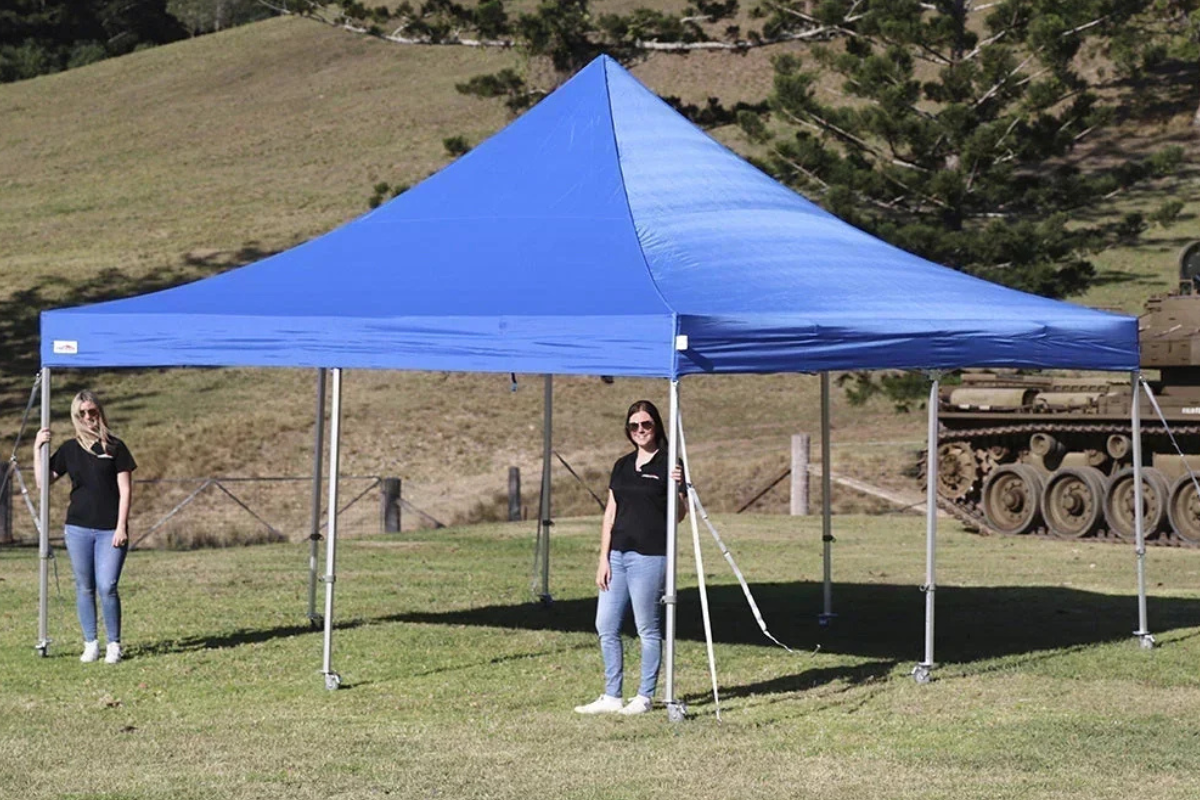
Outdoor events have a funny way of keeping you humble. You can spend weeks planning every little detail, only for Mother Nature to show up with gusty winds and pouring rain that weren't on the guest list. One moment you're enjoying the sunshine, and the next you're chasing a folding chair across a parking lot while your canopy flaps around like it's trying to join the circus.
If you've ever had a cheap canopy buckle under pressure or leak during the first real rainstorm, you already know that not all canopies are built the same. While many recreational models are designed for occasional backyard use, commercial-grade canopies are engineered to withstand far more demanding conditions. That's why investing in the best canopy for wind and rain isn't simply about buying a shelter—it's about protecting your business, your customers, your equipment, and your peace of mind.
Whether you're running a booth at a trade show, selling products at a farmers' market, hosting a sporting event, managing a construction site, or simply looking for dependable shade during outdoor adventures, understanding what makes a canopy truly weather-resistant will help you make a smarter investment.
Key Takeaways
Choosing a canopy tent isn't just about finding one that looks good. The frame, fabric, engineering, and wind testing all determine how well it performs when the weather turns unpredictable. Commercial-grade aluminum frames offer exceptional strength without excessive weight, while premium PVC-coated polyester fabrics provide superior weather protection compared to lightweight recreational materials.
Among today's premium commercial canopies, the X7 Tectonic and Q8 Quasar from Extreme Canopy stand out thanks to their professional engineering, heavy-duty construction, and impressive wind testing. The X7 Tectonic is wind tested to 100 MPH,
while the Q8 Quasar is wind tested to 70 MPH, making both excellent options for businesses and professionals who demand reliability outdoors.
Why Wind and Rain Are Every Canopy's Biggest Test
Sunny days are easy.
Almost every canopy looks fantastic when there's no wind and not a cloud in sight. The real difference appears when the forecast changes unexpectedly.
Wind doesn't simply push against a canopy. It twists the frame, places enormous stress on every connector, stretches the roof fabric, and continuously tests every moving component. At the same time, rain adds weight to the canopy roof while exposing weaknesses in seams, stitching, and waterproof coatings.
A poorly built canopy often fails long before the fabric tears. Plastic connectors crack. Thin steel legs bend. Locking mechanisms become loose after repeated use. Eventually, what started as a bargain turns into an expensive replacement.
This is why experienced event organizers, contractors, sports clubs, promotional companies, and outdoor vendors don't shop based on price alone. They understand that quality construction pays for itself over years of dependable performance.
If you're searching for the best canopy for wind, durability should always take priority over saving a few dollars upfront.
How Much Wind Can a Canopy Really Handle?
This is probably the first question every buyer asks, and the honest answer is: it depends entirely on the canopy's engineering.
Many entry-level recreational canopies begin struggling in winds around 15 to 20 MPH. These shelters are intended for light recreational use and typically feature thinner steel tubing, lightweight fabric, and plastic connection points that simply aren't designed for continuous stress.
Commercial-grade canopies tell a completely different story.
Premium models use reinforced aluminum frames, oversized truss systems, stronger connectors, and professional-grade anchoring systems to dramatically improve stability. When properly installed, these shelters can perform in conditions that would quickly overwhelm budget alternatives.
Extreme Canopy's flagship X7 Tectonic, for example, has been wind tested to 100 MPH, showcasing the strength of its commercial-grade engineering. Its sibling, the Q8 Quasar, has been wind tested to 70 MPH, making it another outstanding choice for demanding outdoor environments.
It's important to understand that these figures represent controlled wind testing—not recommended operating conditions during severe storms. Proper anchoring, correct setup, ground conditions, and local weather all influence real-world performance. Even the best canopy for high winds should always be taken down if severe weather warnings or dangerous storm conditions are expected.
A canopy is designed to provide dependable shelter, not replace a permanent building.
Waterproof Isn't Always Waterproof
Here's a little secret the canopy industry doesn't always advertise.
The terms "water-resistant" and "waterproof" are often used interchangeably, but they mean very different things.
Water-resistant fabrics can handle light showers for a short period. Waterproof fabrics are engineered to prevent water from penetrating even during sustained rainfall.
One of the most reliable ways to evaluate waterproof performance is by examining the fabric construction and coating.
Premium commercial canopies typically utilize PVC-coated polyester fabric because it combines durability with excellent weather protection. The X7 Tectonic features a robust 500D PVC-coated polyester roof that is specifically designed for demanding commercial applications where consistent weather protection matters.
Fabric thickness alone isn't enough.
Quality stitching, reinforced stress points, and professionally sealed seams all contribute to preventing leaks. Without proper seam construction, even premium fabric can allow water to seep through during extended rain.
Roof tension also plays a surprisingly important role. A tightly tensioned canopy roof allows rainwater to run off efficiently instead of collecting in low spots. Water pooling not only increases the load on the frame but can also stretch fabric over time, reducing its long-term performance.
When evaluating the best canopy for wind and rain, always consider the complete weather protection system rather than focusing on a single specification.
The Frame Is Where the Real Strength Lives
If the roof keeps you dry, the frame keeps everything standing.
The frame determines whether your canopy confidently withstands challenging conditions or becomes tomorrow's social media blooper reel.
Commercial aluminum has become the preferred material for professional canopies because it combines impressive strength with relatively low weight. Unlike standard steel
frames, aluminum resists corrosion, making it particularly valuable for frequent outdoor use.
The X7 Tectonic takes this even further with a commercial-grade aluminum frame featuring oversized hexagonal legs and reinforced truss components. Every structural element has been designed to distribute wind loads efficiently while maintaining stability during repeated setups.
Its engineering reflects the needs of professionals who use their canopy every weekend—or every day—not just once each summer.
This level of construction explains why commercial canopies carry higher price tags. You're not simply paying for a shelter; you're investing in precision engineering, premium materials, and long-term reliability.
Why Premium Canopies Cost More—and Why They're Worth It
It's easy to experience sticker shock when comparing a commercial canopy with an inexpensive department store model.
A budget canopy might cost a few hundred dollars.
Professional-grade models represent a larger investment.
The Q8 Quasar ranges from $1,475 to $2,575, while the flagship X7 Tectonic ranges from $1,275 to $4,045, depending on size and configuration.
At first glance, those numbers may seem significant.
But consider the bigger picture.
Businesses rely on their canopy to protect expensive products, display professional branding, shelter employees, and create positive customer experiences. A single canopy failure during an important event can cost far more than the difference between an entry-level shelter and a premium commercial model.
Rather than replacing inexpensive canopies every few seasons, many professionals choose to invest once in equipment built for years of dependable performance.
The result is lower long-term ownership costs, greater reliability, and considerably less stress whenever dark clouds begin rolling in.
Comparing Popular Canopy Options
Finding the right canopy often comes down to balancing performance, durability, and budget. While recreational canopies may be suitable for occasional family gatherings, commercial users require equipment that performs consistently in demanding environments. The table below offers a quick comparison of the different categories available.
| Model | Frame | Wind Testing | Fabric | Price Range |
|
Budget Consumer Canopy |
Lightweight Steel | Typically 15–20 MPH | Basic Polyester | Under $300 |
|
Mid-Range Commercial Canopy |
Steel or Aluminum | 20–40 MPH (varies by manufacturer) | Polyester | $500–$1,200 |
|
Extreme Canopy Q8 Quasar |
Commercial-Grade Aluminum | Wind Tested to 70 MPH | Premium PVC-Coated Polyester | $1,475–$2,575 |
|
Extreme Canopy X7 Tectonic |
Heavy-Duty Commercial Aluminum | Wind Tested to 100 MPH | 500D PVC-Coated Polyester | $1,275–$4,045 |
While budget models certainly have their place, they simply aren't engineered for the repeated setup, transportation, and exposure that commercial users experience. The difference becomes obvious after months—or even years—of real-world use.
X7 Tectonic vs. Q8 Quasar: Which One Should You Choose?

Both the X7 Tectonic and the Q8 Quasar are built for professional use, but they serve slightly different audiences.
The Q8 Quasar is an excellent choice for businesses that attend trade shows, community events, sporting competitions, school functions, and weekend markets. Its commercial-grade aluminum frame provides outstanding durability while remaining easy to transport and quick to set up. Being wind tested to 70 MPH, it offers confidence in a wide range of outdoor environments where dependable performance is essential.
The X7 Tectonic, however, takes commercial performance to another level.
Designed as Extreme Canopy's flagship heavy-duty frame, it incorporates oversized structural components, premium engineering, and reinforced construction intended for the most demanding applications. Its 100 MPH wind testing demonstrates the remarkable strength of the frame when properly installed and anchored under controlled testing conditions.
Businesses that exhibit throughout the year, construction companies working outdoors, emergency response organizations, sports clubs, government agencies, and promotional teams often appreciate the extra confidence that comes from investing in equipment built for constant use.
If you're looking for the best pop up canopy for wind, both models deserve serious consideration, but the X7 Tectonic stands out for professionals who expect their equipment to perform year after year in challenging environments.
Don't Overlook Your Anchoring System
Even the strongest canopy is only as good as the way it's secured.
People often spend thousands of dollars on a premium canopy and then attempt to anchor it with lightweight pegs designed for backyard camping. That's a recipe for disappointment.
Professional anchoring systems distribute forces evenly across every leg, helping the frame work exactly as it was designed. Steel pins, heavy-duty weight bags, tie-down straps, and properly tensioned ropes all contribute to overall stability.
Ground conditions matter just as much.
Grass, asphalt, concrete, sand, and gravel each require different anchoring methods. Using the right system for the surface dramatically improves performance and safety.
This becomes particularly important when using the best canopy for high winds, because proper anchoring allows the frame to perform closer to its tested capabilities.
Beach Canopies Face a Different Challenge
At first glance, the beach might seem like an easy place for a canopy.
After all, it's flat, open, and sunny.
Unfortunately, that's exactly why beaches create some of the harshest conditions imaginable.

Open coastlines experience steady winds with very few natural windbreaks. Sand provides less grip than soil, while salt air accelerates corrosion on lower-quality frames.
Anyone shopping for the best beach canopy for wind should look beyond lightweight recreational shelters. A corrosion-resistant aluminum frame, durable roof fabric, and an effective anchoring system designed specifically for sandy conditions make an enormous difference.
Commercial-grade construction isn't just for businesses. Families who spend frequent weekends at the beach often discover that investing in a better canopy means fewer worries and considerably more time actually enjoying the ocean.
Sidewalls Turn Good Weather Protection into Great Weather Protection
Many buyers concentrate entirely on the canopy roof and forget one simple fact.
Rain doesn't always fall straight down.
Wind pushes rain sideways, allowing moisture to enter from every direction if the canopy remains completely open.
Adding sidewalls transforms a canopy into a far more functional shelter. They provide protection from wind-driven rain, reduce drafts, improve privacy, and help create a more comfortable environment during changing weather conditions.
For commercial users, sidewalls also offer additional space for branding, messaging, and product displays. A fully enclosed canopy creates a more professional appearance while helping customers stay comfortable regardless of the weather.
It's a simple upgrade that significantly increases the versatility of any commercial canopy.
A Quality Canopy Is an Investment, Not an Expense
One of the biggest misconceptions people have is believing that all canopies eventually wear out at roughly the same rate.
They don't.
Commercial-grade equipment is built differently from the ground up. Stronger frames resist bending. Better fabrics maintain their appearance longer. Premium hardware withstands repeated setup cycles without loosening or breaking.
Over time, these advantages reduce replacement costs while minimizing disruptions to your business or events.
Instead of worrying about whether your shelter will survive the afternoon, you can focus on what actually matters—serving customers, promoting your brand, or enjoying time outdoors.
That's the difference quality engineering makes.
When shopping for the best canopy for wind, it's worth remembering that the lowest purchase price rarely delivers the lowest long-term cost.
Frequently Asked Questions
1. What wind speed is safe for a canopy?
Safe wind speeds depend on the canopy's design, engineering, and anchoring system. Lightweight recreational canopies are generally suitable only for light breezes, while commercial-grade models are engineered for significantly greater performance. Always follow the manufacturer's recommendations, anchor the canopy correctly, and dismantle it whenever severe weather warnings are issued.
2. Are pop-up canopies waterproof?
Not every pop-up canopy is fully waterproof. Many inexpensive models provide only basic water resistance and may leak during prolonged rainfall. Commercial canopies that use premium PVC-coated polyester fabrics, reinforced stitching, and properly tensioned roofs offer much better protection against heavy rain and changing weather conditions.
3. How do I anchor a canopy in windy conditions?
Every leg should be secured using the appropriate anchoring method for the surface you're setting up on. Ground stakes work well on soil, while heavy-duty weight systems are ideal for concrete or asphalt. Tie-down straps and ropes should be properly tensioned to maximize stability. Even the best canopy for wind and rain depends on correct anchoring to perform safely.
Final Thoughts: Choose Confidence Over Convenience
Weather is unpredictable, but your canopy shouldn't be.
Whether you're exhibiting at a busy trade show, operating a food truck, organizing a sporting event, managing a construction project, or enjoying a weekend at the beach, investing in a professionally engineered canopy provides peace of mind that budget alternatives simply can't match.
For businesses and professionals who demand premium performance, the Q8 Quasar offers outstanding value with its 70 MPH wind testing, commercial-grade aluminum frame, and dependable weather protection. If your work requires the highest level of durability, the X7 Tectonic raises the bar even further with its 100 MPH wind testing, robust commercial construction, and premium 500D PVC-coated polyester roof designed for demanding outdoor environments.
When you're searching for the best canopy for wind and rain, don't focus solely on the initial purchase price. Consider the quality of the materials, the engineering behind the frame, the weather protection offered by the fabric, and the long-term value that comes from buying equipment built to last.
Explore the complete range of commercial-grade canopies from Extreme Canopy to find the model that best suits your needs. Whether you choose the versatile Q8 Quasar or the flagship X7 Tectonic, you'll be investing in a canopy designed to help you stay protected, look professional, and perform confidently—rain or shine.